
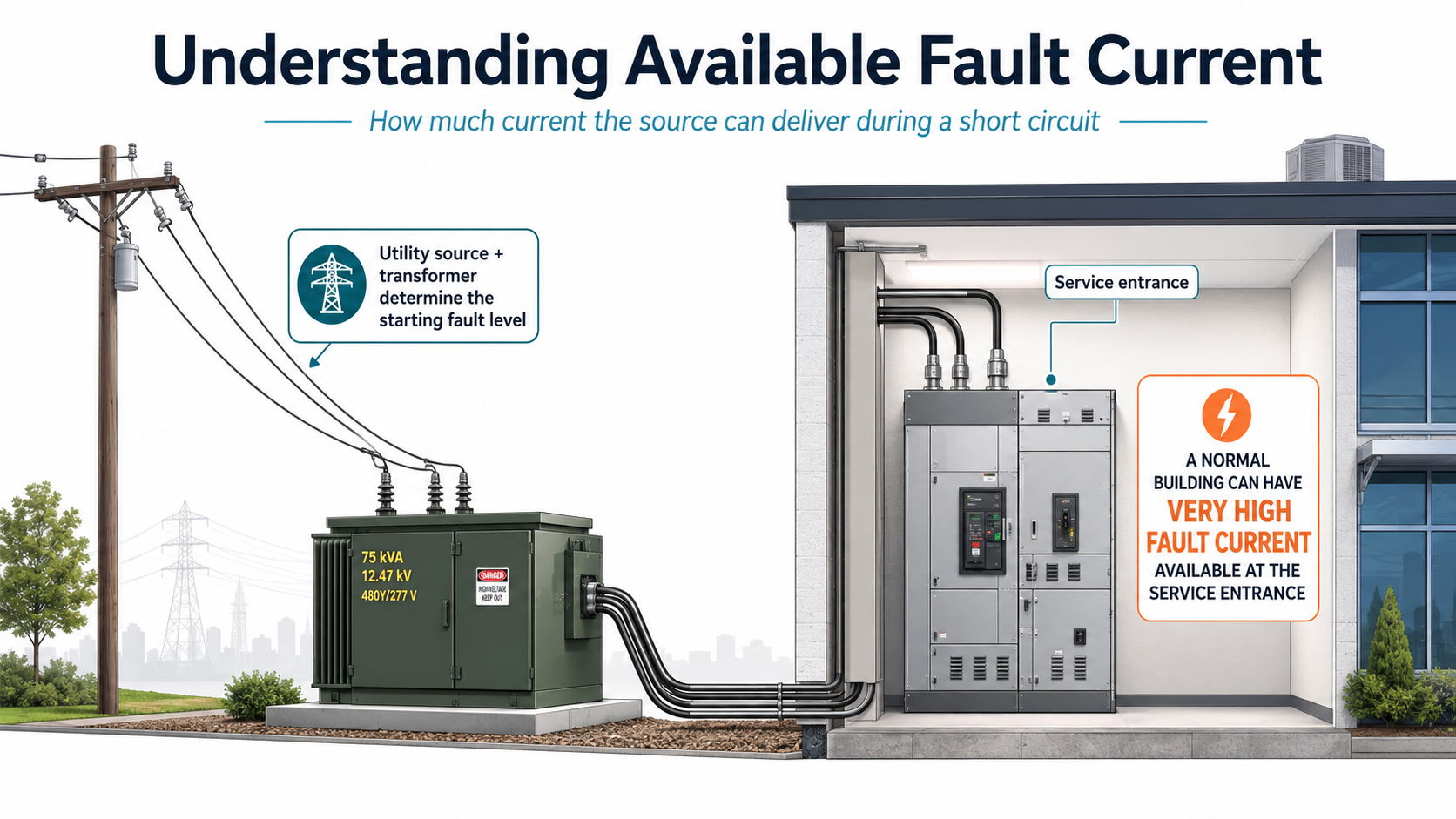
FAULT CURRENT
Understanding Available Fault Current
What "available fault current" actually means at a service entrance — and why utility data matters.
FIELD NOTE · 18 MIN
Plainspoken explainers on power systems concepts. Each note connects back to a lab you can actually run.
What "available fault current" actually means at a service entrance — and why utility data matters.
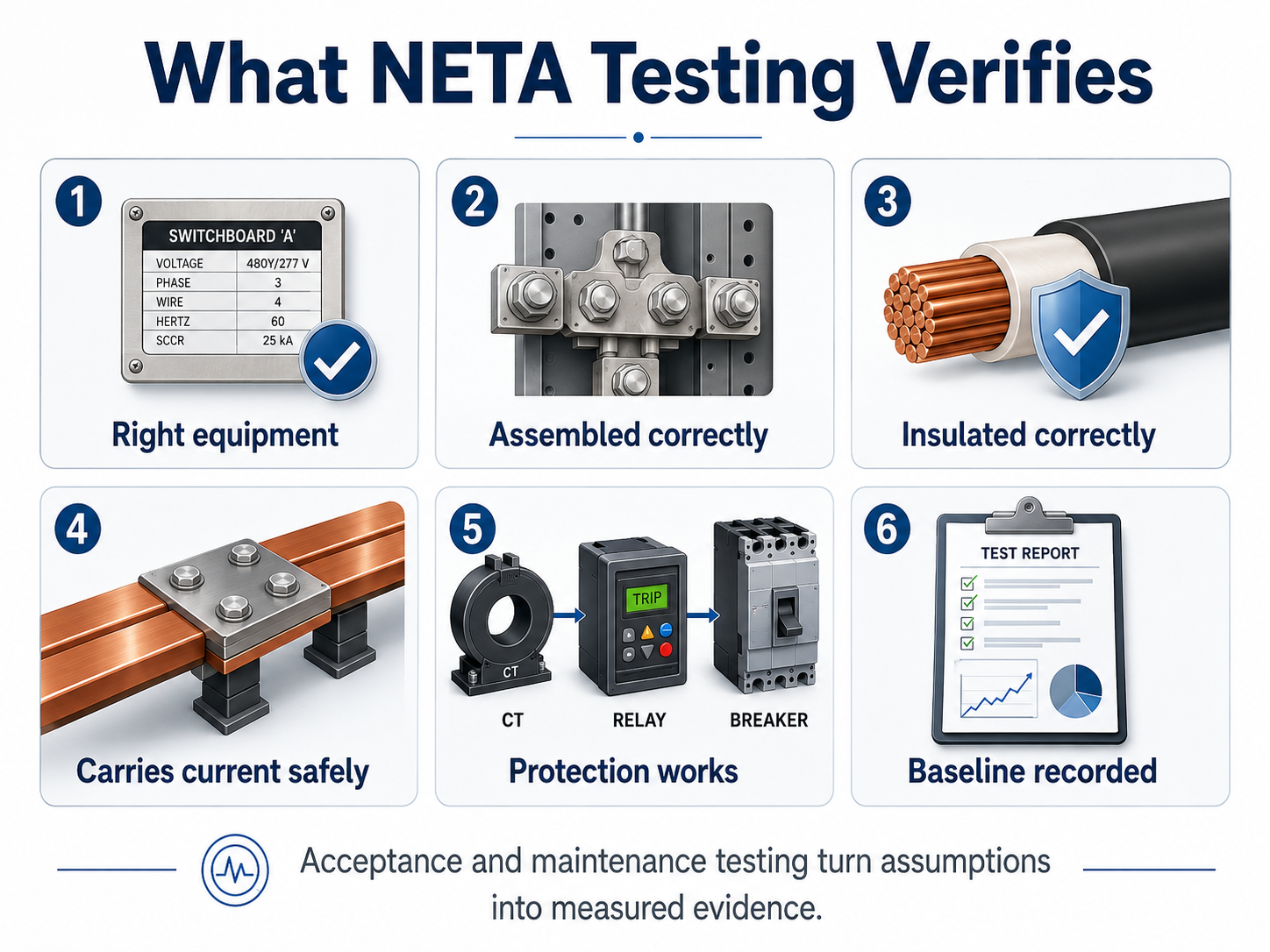
A practical look at what acceptance and maintenance tests are really checking for.
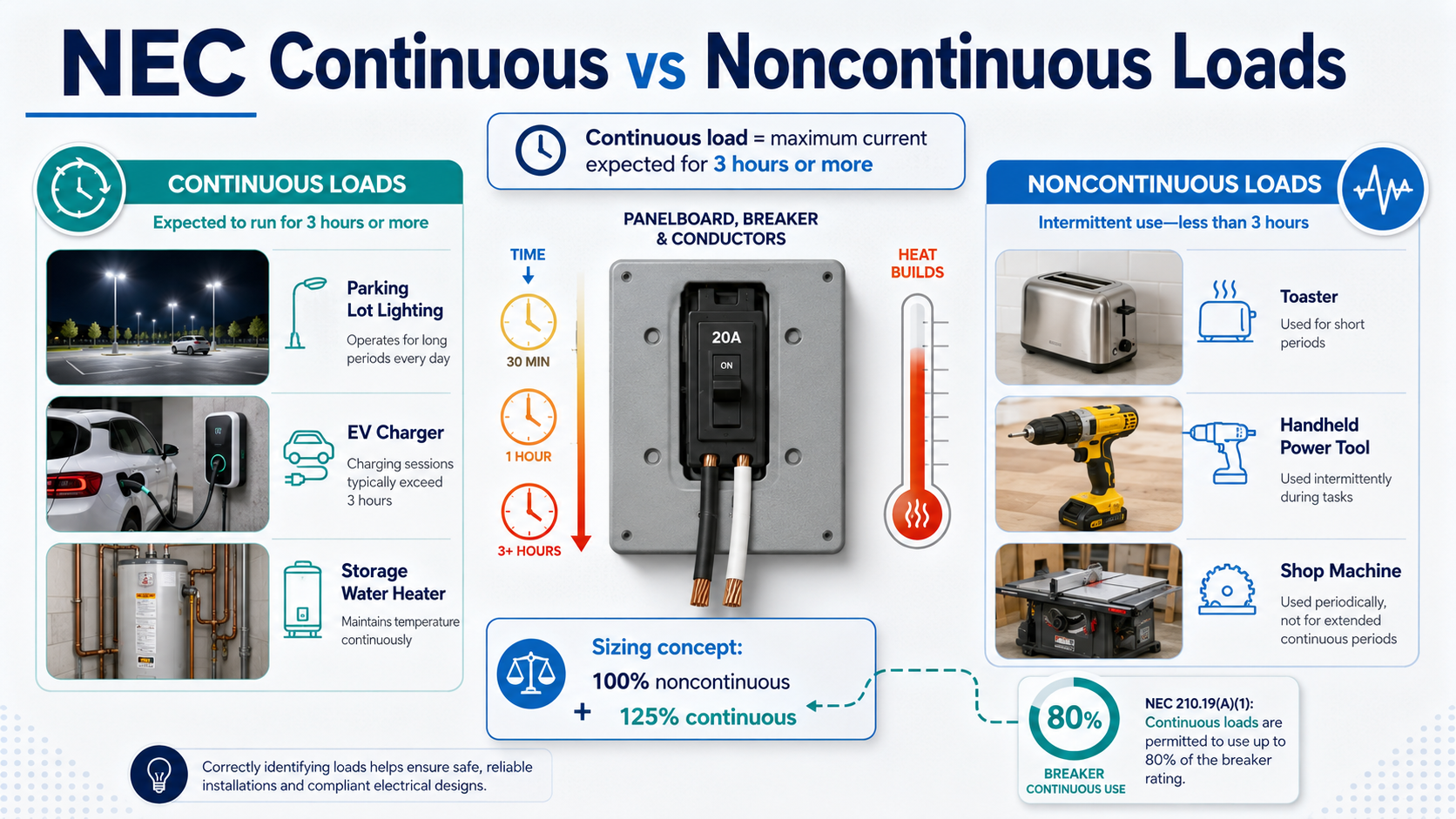
Learn when the NEC 125% rule applies, when it doesn't, and how to separate continuous and noncontinuous loads without bad math.
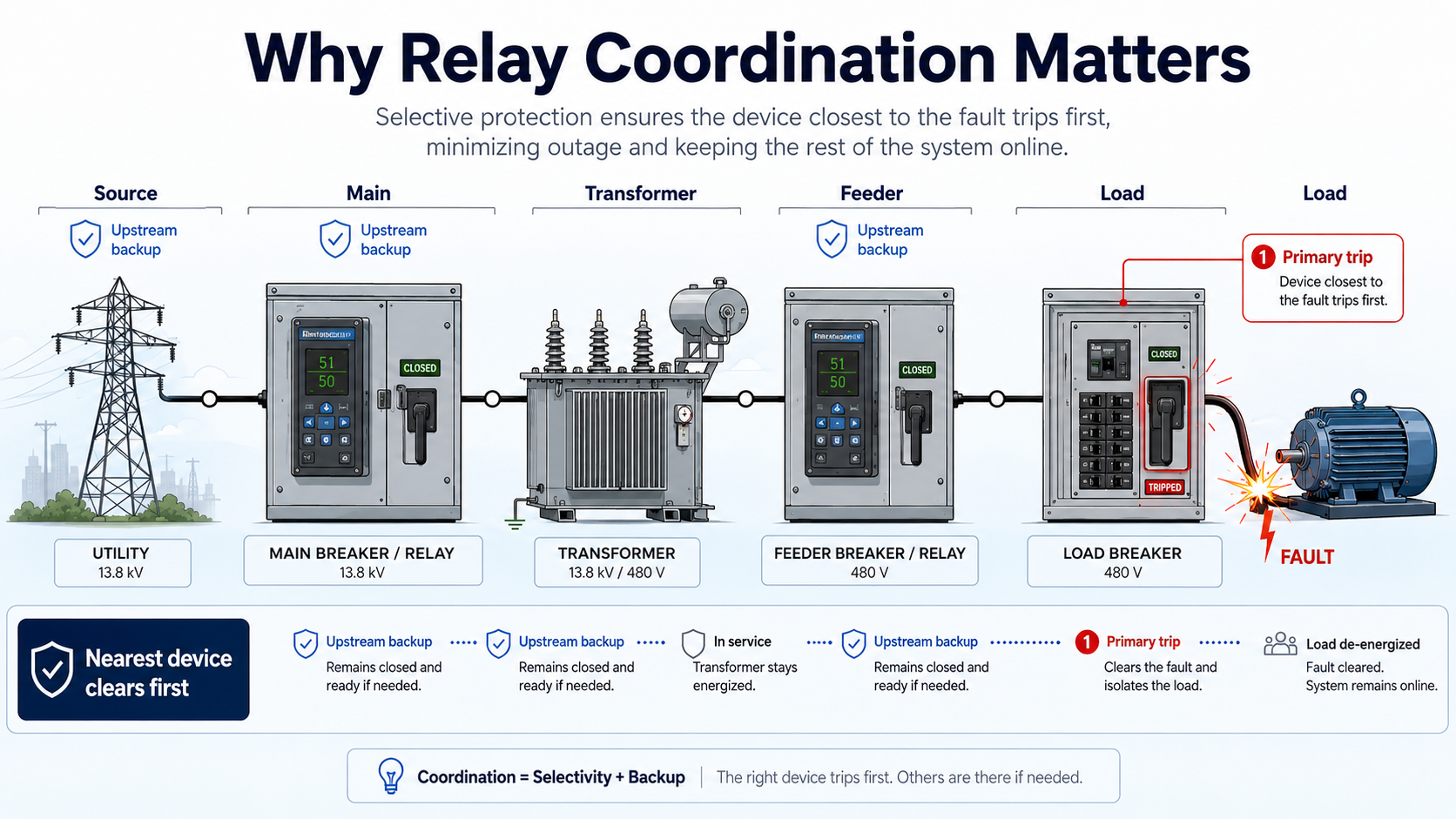
Selectivity, miscoordination, and how a single bad setting can turn a local fault into a larger outage.
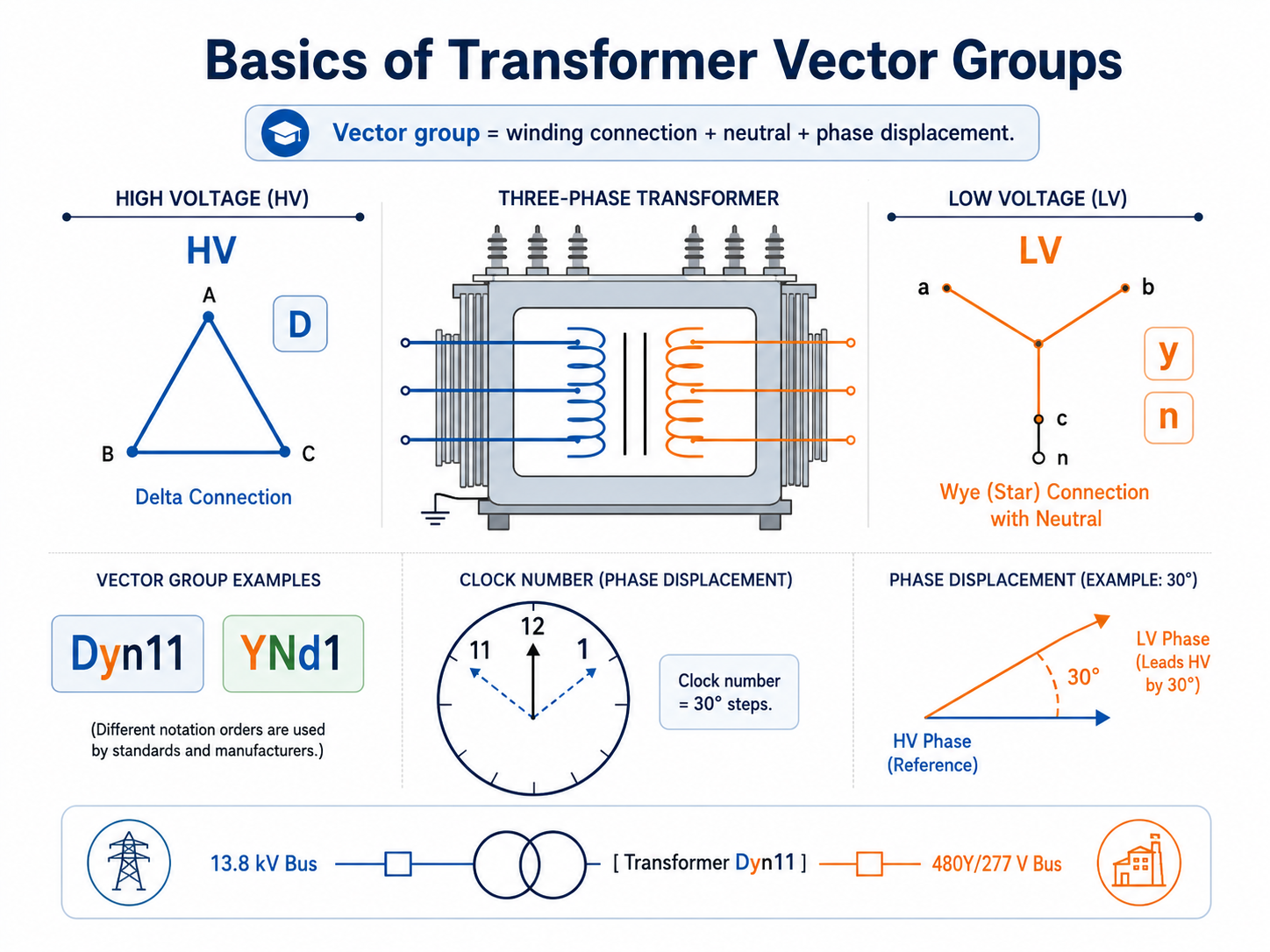
A plainspoken guide to transformer vector groups — Dyn11, YNd1, delta and wye windings, neutral availability, clock notation, 30° phase displacement, and why the vector group label matters on a one-line.
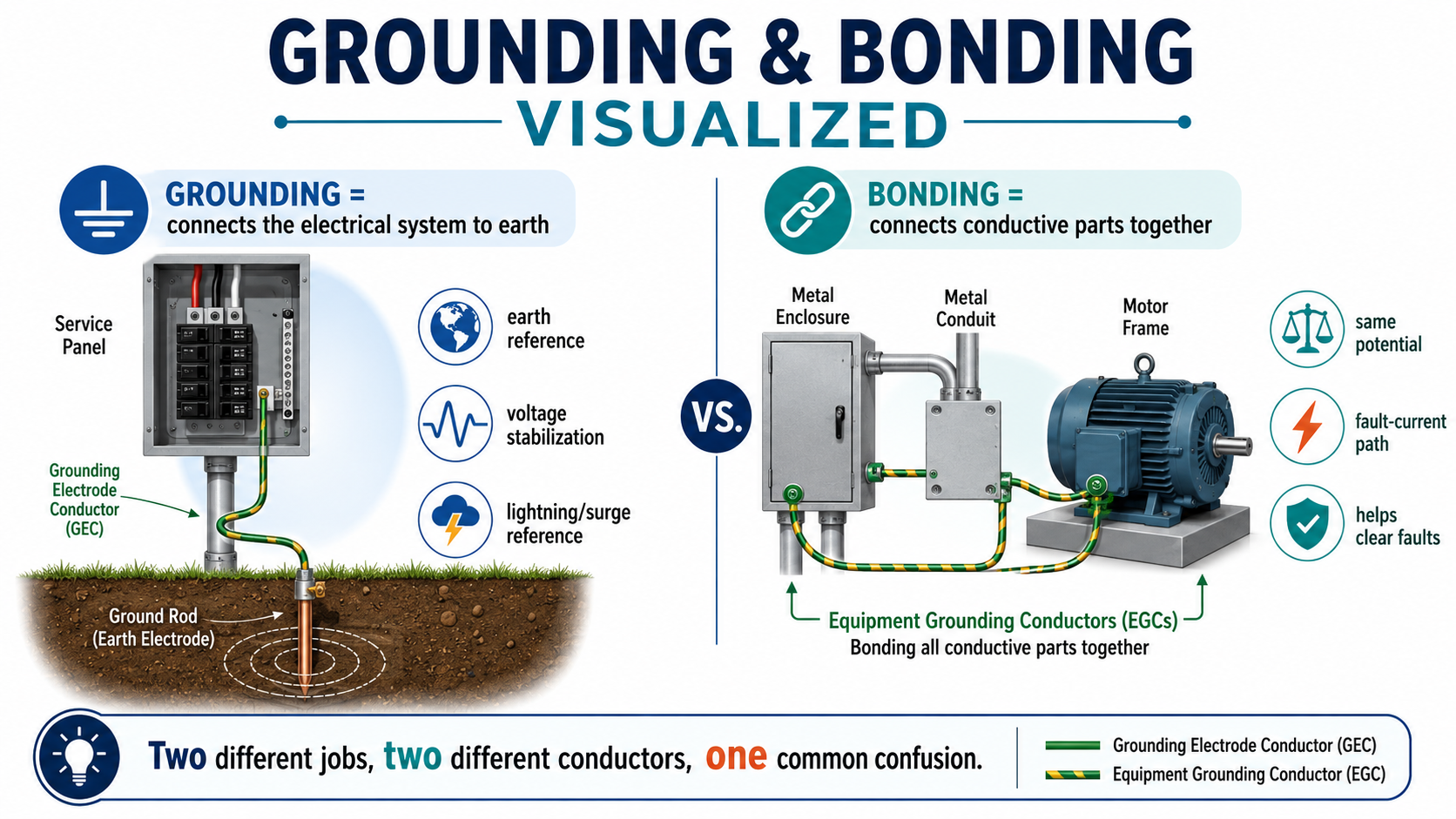
Short technical writing, plainspoken explainers on power systems concepts. This note visualizes the difference between grounding, bonding, grounding electrode conductors, equipment grounding conductors, neutral-ground bonding, and the effective ground-fault current path.
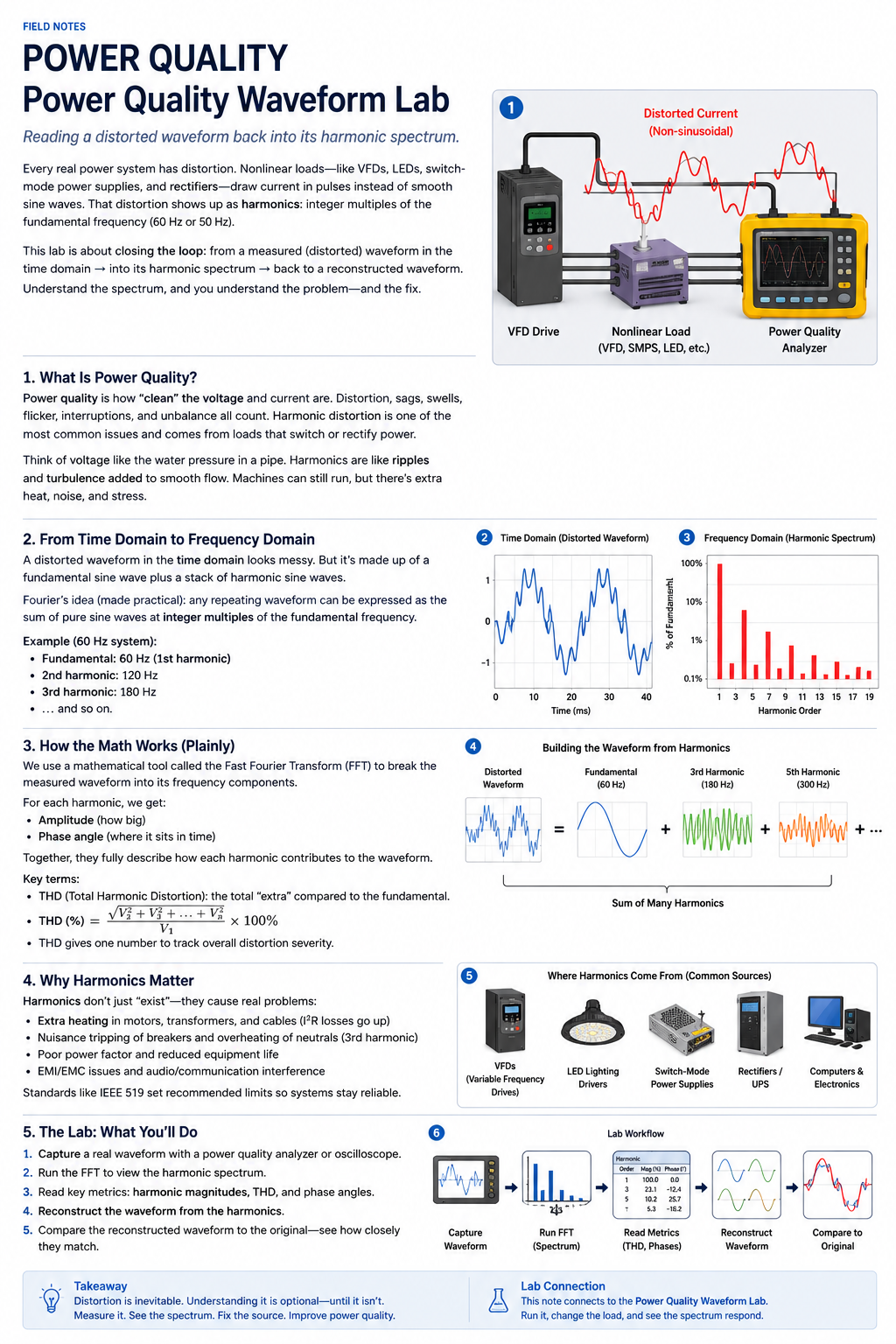
Reading a distorted waveform back into its harmonic spectrum.
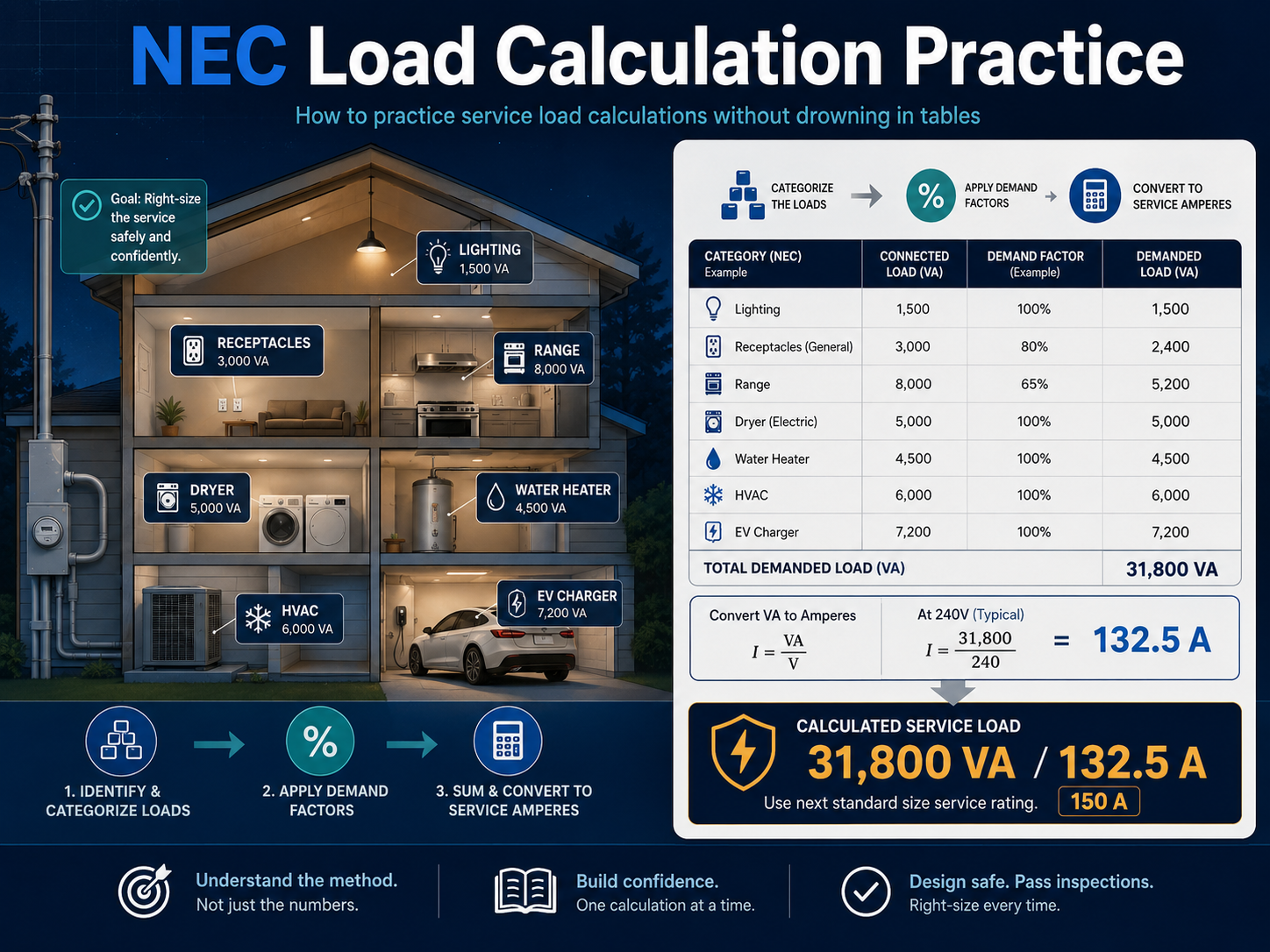
How to practice service load calculations without drowning in tables. A beginner-to-advanced guide for turning connected electrical loads into a defensible service-sizing number.